
Catalogue

  • Tel./Fax: +7 (495) 789-48-11
  • E-mail: info@vetfaktor.ru vet@faktor.ru
  • 3 Kvantovaya Street, Troitsk, 108840, Russia
  • Office hours: 08:00–16:30 (Moscow time)
  • VET FAKTOR LLC
My account
Aquaculture
PCR

PCR-KOI-HERPESVIRUS-FAKTOR (cat. no. D56326-VET) (55 reactions / 110 reactions)

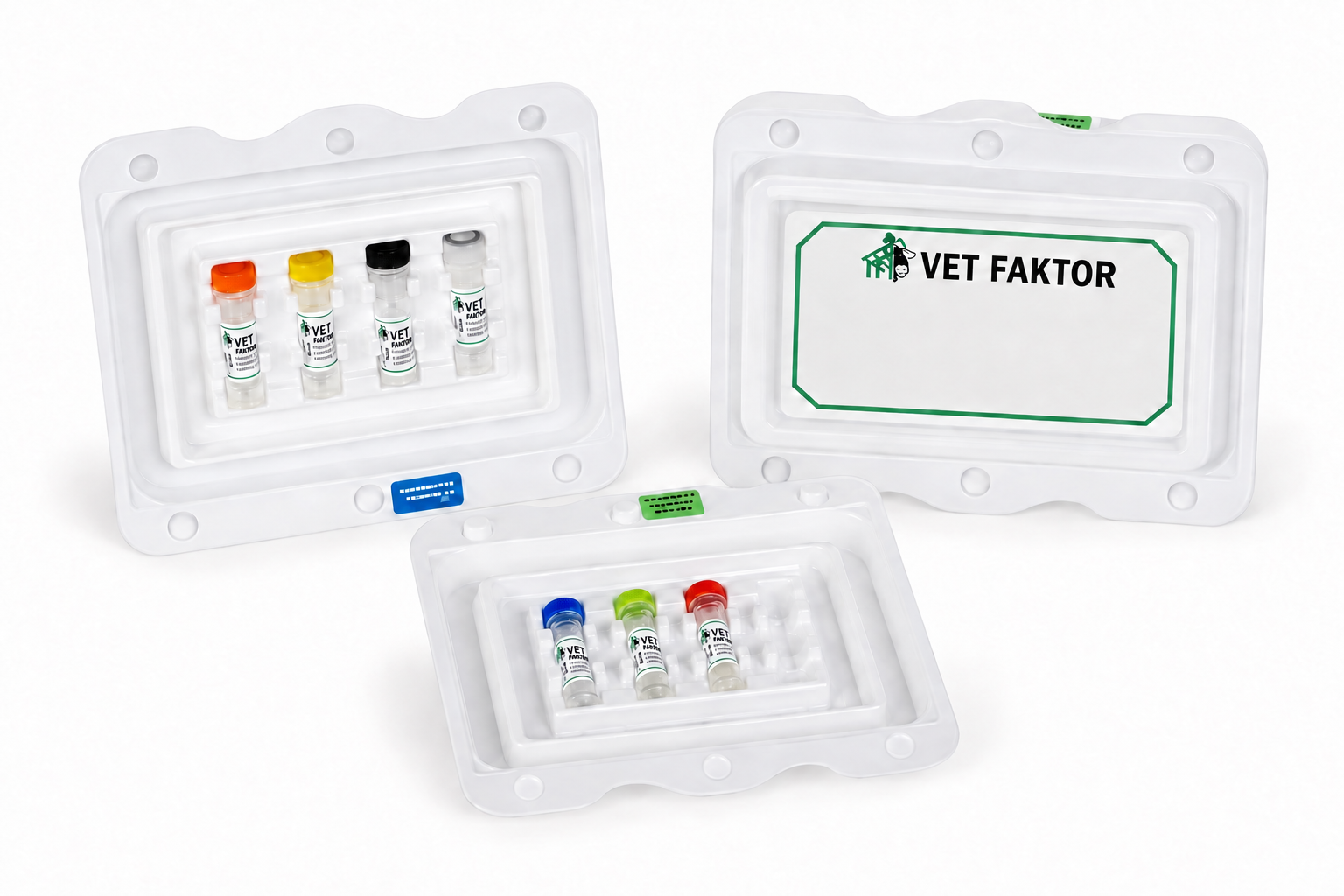
Increase Photo and label

Intended use

The kit is intended for the detection of koi herpesvirus (KHV) DNA in biological and pathological material from fish.
Catalogue number
D56326-VET
Method / type
PCR
Section
Aquaculture
Animal species
Aquaculture

Specifications

Product information

55 reactions / 110 reactions, controls included (internal, positive and negative).
A nucleic acid extraction kit is required (for example, DNA/RNA-S-FAKTOR).

Description

The kit is intended for the detection of koi herpesvirus (KHV) DNA in biological and pathological material from fish (liver, kidneys, spleen, fins, brain, intestine), as well as in infected cell cultures and surface swabs, by DNA amplification with real-time fluorescence detection.

Order questions

How to obtain a commercial offer?

Add the necessary goods to the KP request, specify the quantity and contacts. The specialist will clarify the conditions of delivery.

Can we discuss the task of the lab?

Leave a comment on the request or order a return call.

How do I get in touch with the company?

Phone: +7 (495) 789-48-11B. Mail: vet@faktor.ru. Office hours: weekdays, 08:00–16:30.

About the disease

Koi herpesvirus disease

Pathogen: koi herpesvirus (KHV), also known as cyprinid herpesvirus 3

A bit of history

Mass mortality of koi and common carp caused by a new virus began to be noticed in the late 1990s: the first reports came from Israel, Germany and the USA, and when archived samples were tested, viral DNA was also found in carp that had died in the United Kingdom in 1996. In 2000 the virus was described and named koi herpesvirus, and it quickly spread through Europe and Asia with the ornamental fish trade. The disease is now listed by the World Organisation for Animal Health (WOAH).

Who is affected

Common carp, including ornamental koi, and its hybrids are affected; fish of all ages except larvae are susceptible. Outbreaks occur at water temperatures of roughly 16 to 28 °C. The virus damages the gills, skin and kidneys, and mortality can reach 80–100 %. It is shed in skin mucus, urine and faeces and spreads through water and by contact with sick fish. Fish that survive may remain hidden carriers of the virus for a long time. The virus is not dangerous to humans.

How the diagnosis is confirmed in Russia

In Russia, as recommended by WOAH, the main confirmatory method is PCR: detection of viral DNA in the gills, kidney and spleen, and in fish without clinical signs also in the gut and brain. Virus isolation in cell culture takes longer and is less sensitive, so PCR is used for farm surveys and to confirm the diagnosis. For final confirmation, WOAH recommends sequencing the PCR product.

For reference only. The diagnosis is made by a veterinary specialist based on laboratory test results.

Request instructions

We will send the instructions to your email address.

Catalogue no.:

Contact details

For information about data processing, see our privacy policy.