
Product information
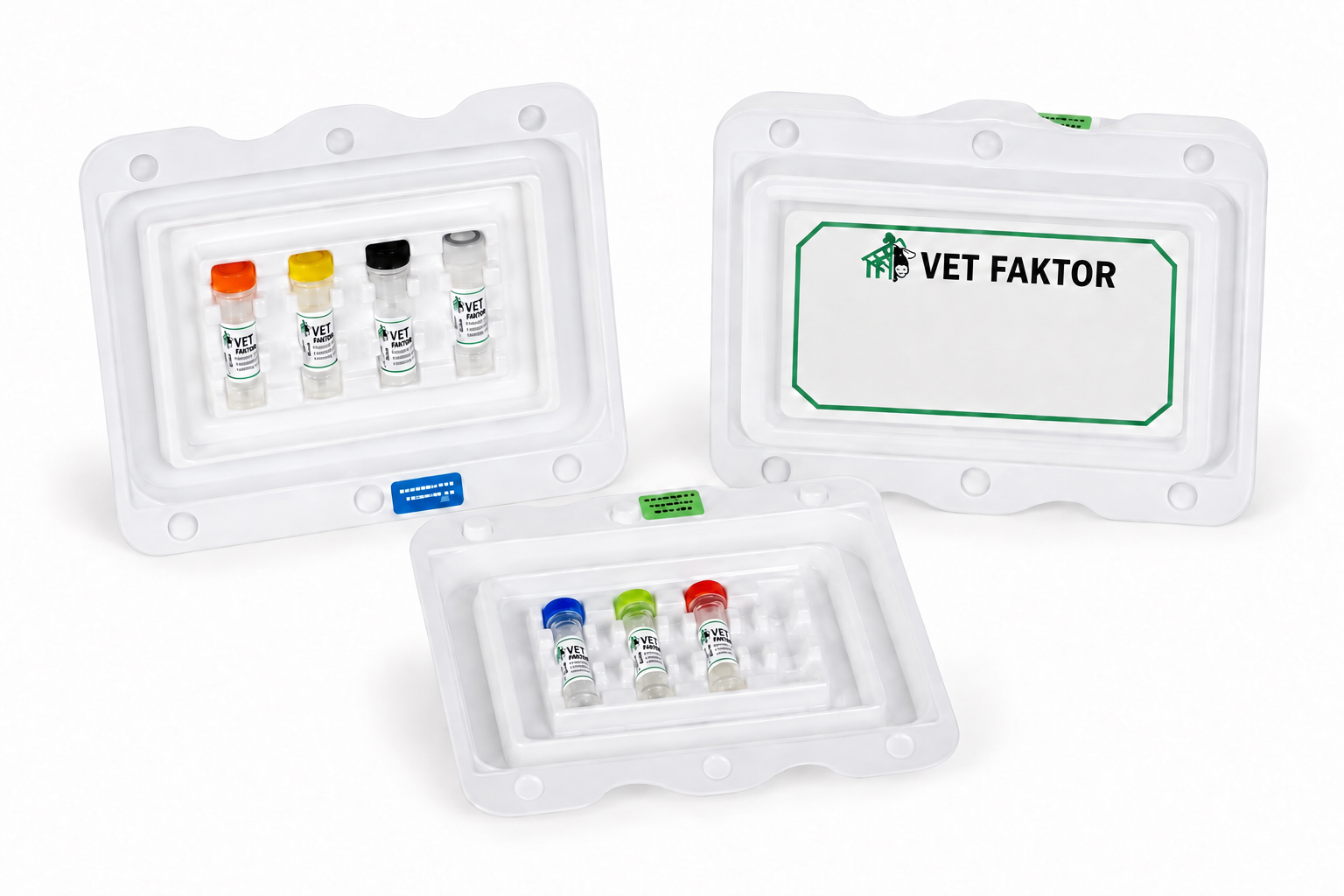
Compilation of 55 reactions / 110 reactions, including controls (COE, COE, DOC) The use requires a set of reagents to extract NCs (e.g. DNA/RNA-C-ACTOR).
Home / Products / PCR / Animal diseases / Cattle
Add the necessary goods to the KP request, specify the quantity and contacts. The specialist will clarify the conditions of delivery.
Leave a comment on the request or order a return call.
Phone: +7 (495) 789-48-11B. Mail: vet@faktor.ru. Office hours: weekdays, 08:00–16:30.
Pathogen: the bacterium Anaplasma phagocytophilum (formerly Ehrlichia phagocytophila, Ehrlichia equi)
The disease was first described in sheep in Scotland in 1932 and named tick-borne fever: it was discovered while studying another tick-borne infection, louping ill. In 1951 the agent was described as a rickettsia, and it was later placed among the ehrlichiae. A similar disease was found in horses in the USA in 1969 and in humans in 1994, and in 2001 genetic analysis showed that all these agents belong to one species, named Anaplasma phagocytophilum.
The bacterium multiplies inside neutrophils, forming clusters (morulae) in them. It is transmitted by ixodid ticks, and wild animals, mainly rodents and deer, serve as reservoirs. In sheep and cattle the disease causes fever, a drop in milk yield and abortions, and suppresses immunity, opening the way to secondary infections. Horses, dogs and cats are also affected, and in humans the agent causes human granulocytic anaplasmosis. It should not be confused with bovine anaplasmosis, whose agent, Anaplasma marginale, lives in red blood cells.
In the acute stage, morulae can be seen in neutrophils on blood smears stained by Romanowsky, but they persist only briefly and are not found in every sick animal. So in the first days of illness the diagnosis is more reliably confirmed by PCR, which detects A. phagocytophilum DNA in blood and does not confuse it with other anaplasmas. Antibodies are detected by indirect immunofluorescence or ELISA, usually as a rising titre in paired serum samples. PCR is also used to test ticks removed from animals.
For reference only. The diagnosis is made by a veterinary specialist based on laboratory test results.
© 2015–2026 VET FAKTOR LLC. All rights reserved.