
Compilation
55 reactions / 110 reactions, controls included (internal, positive and negative).
A nucleic acid extraction kit is required (for example, DNA/RNA-S-FAKTOR).
Home / Products / PCR / Animal diseases / Poultry
DNA Mycoplasma gallisepticum and Mycoplasma synoviae reagents in biological material (nasal and conjunctival flushes; joints sinyl fluid; whole blood, frozen embryo material, suffocating embryos; parts of parenchimatose organs, trachea, air bags)
55 reactions / 110 reactions, controls included (internal, positive and negative).
A nucleic acid extraction kit is required (for example, DNA/RNA-S-FAKTOR).
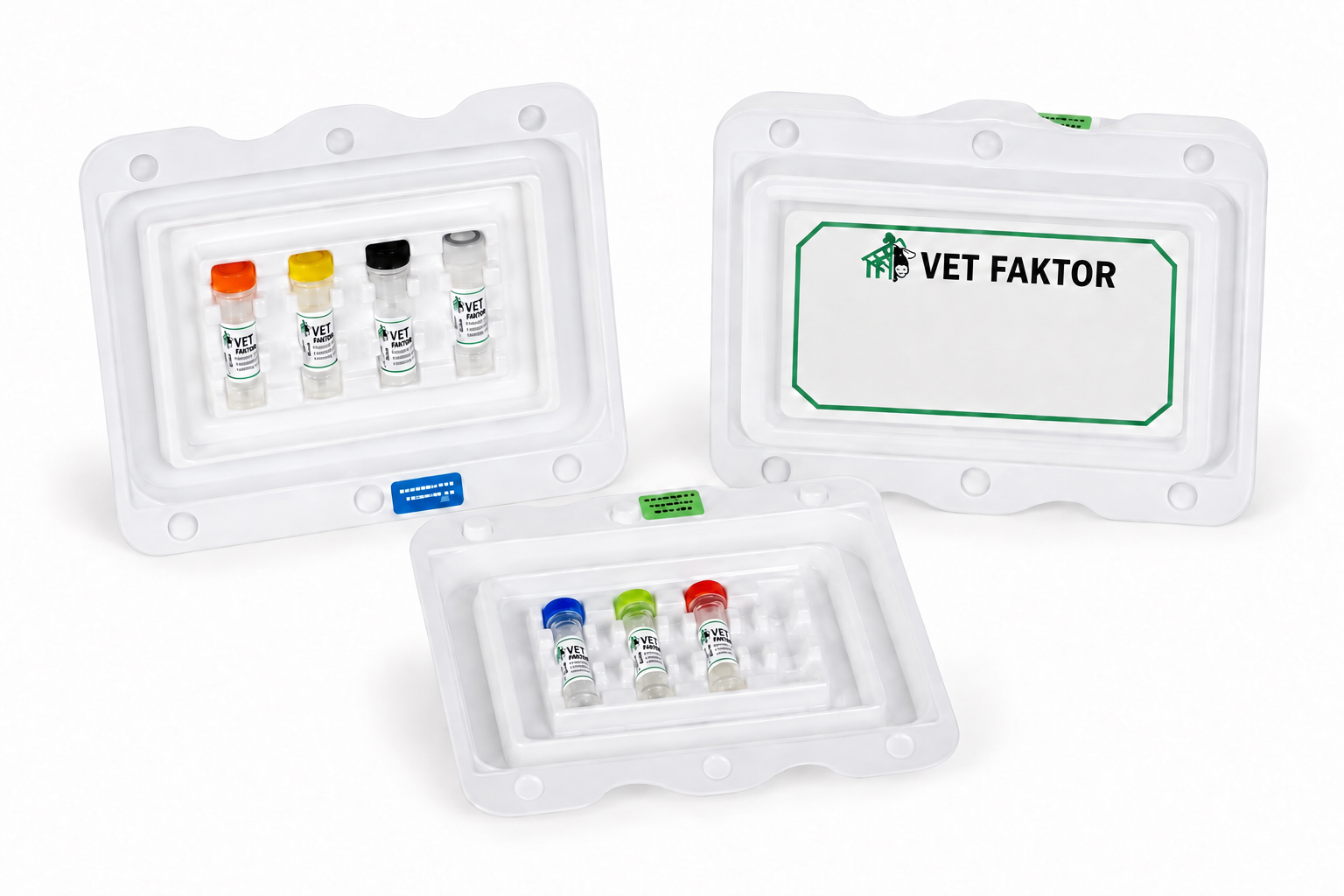
The reagent kit consists of 2 components:
Set No. 1 from -20 to -18°C;
Set No. 2 from 2 to 8 °C
12 months
The reagent set is designed to identify DNA Mycoplasma gallisepticum and Mycoplasma synoviae in biological material (nasal and conjunctival flushes; joints sinyl fluid; whole blood, frozen embryo material (Yeltz, allantoic liquid, chorion allantoise shell), sub-suck embryos (trachea, lungs), parenchimatose organ fragments (steine, lungs), trachea, air bags) using a polymeric chain reaction (PCR) with a fluorescent section in real time.
To date, mycoplasmosis is a constraint to the intense management of poultry, which in turn is reflected in economic losses from reduced and delayed egg-infestation, low fertilisation of eggs and high fertilisation of chickens. Despite the variety of species compositions of micoplasm in birds, the emphasis in veterinary practice is on the exponents of respiratory micoplasmosis (Mycoplasma gallisepticum) and infectious coinitis (Mycoplasma synoviae).
It should be borne in mind that clinical and pathologistial signs of mycoplasmic infections are not pathogenic, similar symptoms can be observed in other diseases of viral or bacterial ethology. Due to the high specificity and accuracy of the PCR is one of the most reliable methods for the diagnosis of mycoplasmosis.
Add the necessary goods to the KP request, specify the quantity and contacts. The specialist will clarify the conditions of delivery.
Leave a comment on the request or order a return call.
Phone: +7 (495) 789-48-11B. Mail: vet@faktor.ru. Office hours: weekdays, 08:00–16:30.
Catalogue no.: EDR001-VET
Reagent kit for extraction (extract) of DNA and RNA from clinical material
Nucleic acid extraction kitsCatalogue no.: EDR003-VET
Reagent kit for extraction (dNA) of clinical material
Nucleic acid extraction kitsPathogens: Mycoplasma gallisepticum, M. synoviae, M. meleagridis and M. iowae
As early as 1905 a contagious disease of turkeys, later called infectious sinusitis, was reported in England. In 1952 it was found that turkey sinusitis and chronic respiratory disease of chickens are caused by the same microorganism, later named Mycoplasma gallisepticum. In 1994 this pathogen unexpectedly caused an epidemic of conjunctivitis in wild house finches in North America.
Chickens and turkeys are affected, as well as other domestic and ornamental birds. M. gallisepticum causes chronic respiratory disease in chickens and sinusitis in turkeys, M. synoviae causes synovitis, airsacculitis and eggshell defects, and M. meleagridis and M. iowae mainly affect turkeys, reducing hatchability and causing leg disorders in poults. Mycoplasmas are transmitted through the egg and through the air, and an infected flock remains a carrier for life. Productivity and weight gain fall and carcass condemnations rise. These mycoplasmas are harmless to humans.
Flocks are screened serologically: antibodies are detected by agglutination and ELISA, and positive results are confirmed by HI, since agglutination can be non-specific. Isolating mycoplasmas on special media takes up to three weeks. PCR detects the DNA of a specific species directly in choanal, tracheal and joint swabs, embryos and environmental swabs, and sequencing helps trace the source of infection.
For reference only. The diagnosis is made by a veterinary specialist based on laboratory test results.
© 2015–2026 VET FAKTOR LLC. All rights reserved.

